
New Research on the Impact of Candidate Sourcing on Diversity Efforts
Jun 30, 2022
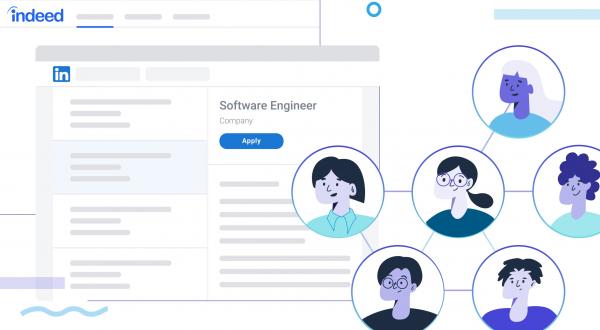
New York,United States - June 30, 2022 /PressCable/ —
A couple of myths are floating around the talent acquisition industry these days, according to research firm Datapeople. One is that candidate sourcing is an equitable approach to diversity, equity, and inclusion (DEI). The other is that inbound recruiting is inefficient.
Neither is the case, according to Datapeople. There’s no need to manufacture diversity through candidate sourcing if the top of the applicant funnel is already diverse. And inbound recruiting is very efficient, if done correctly.
Datapeople says that hiring teams turn to candidate sourcing because it offers proactive approaches to DEI. Yet candidate sourcing limits the number of job seekers encouraged to apply for a given role and also invites unconscious biases to influence the candidates chosen. It’s an attempt to manufacture diversity, despite research showing that a qualified, diverse top of the funnel yields a qualified, diverse bottom of the funnel.
A lot of hiring teams are doing diversity sourcing these days, says Datapeople, despite how it may look when a recruiter reaches out to a candidate from an underrepresented group and mentions DEI. Candidates are often left to wonder exactly why a recruiter is contacting them. That’s especially true if the candidate looks at the company’s website and sees few or no faces similar to theirs.
Referrals are also inherently inequitable, according to Datapeople. Not only do employee referral programs tend to favor referred candidates, they also tend to perpetuate whatever lack of diversity already exists. As a whole, referral programs can exclude large swaths of qualified job seekers who don’t know anyone at the company. If a job seeker gets a referral before the job posting goes live, for example, they may get an offer before anyone else has even seen the job post. Also, when an employee refers someone, the hiring team may favor that candidate without even realizing it.
In a recent analysis of tech jobs data from 10,000 U.S.-based employers, Datapeople’s science team found a number of recruiting trends in tech hiring. One of these trends was a heavy bias towards applicants from referrals. These applicants are, on average, 9 times more likely to get an offer than applicants from inbound recruiting efforts, despite inbound recruiting channels bringing in the majority of tech applicants. Over 80% of all applicants to tech jobs come from inbound recruiting channels like company career pages, Indeed, LinkedIn, and other online job boards. Yet these applicants are only half of all hires. Meaning hiring teams are favoring referred applicants disproportionately.
The second myth is that inbound recruiting is inefficient. But, according to Datapeople, the inbound recruiting channel isn’t the issue ─ it’s the job description. Simply put, a job post is still the most important tool in the recruiter toolbox and often represents the only piece of messaging a potential candidate sees from a company. Which means it can make or break a recruiting effort.
Contact Info:
Name: Charlie Smith
Email: Send Email
Organization: Datapeople
Address: 90 Broad St Suite 803, New York, NY 10004, United States
Website: https://datapeople.io/
Source: PressCable
Release ID: 89077632
If you detect any issues, problems, or errors in this press release content, kindly contact [email protected] to notify us. We will respond and rectify the situation in the next 8 hours.
More News























/file/attachments/orphans/image151_896508.jpeg)







/file/publisher-c1a3f893382d2b2f8a9aa22a654d9c97/2022/12/8fde8817a2e5e02d350fd76645a12789.jpg)


/file/publisher-c1a3f893382d2b2f8a9aa22a654d9c97/2024/12/9179f431dae2a68bfa235d7793865217.jpg)

YOUR NEWS, OUR NETWORK.
Do you have Great News you want to tell the world?
Be it updates about your business or your community, you can make sure that it’s heard by submitting your story to our network reaching hundreds of news sites across 6 verticals.