Istanbul-Based Loxi Reports 58.2% JobBench Score, Matching Frontier AI Models at Lower Cost

Sep 17, 2026

Istanbul, Türkiye, September 17, 2026 -- Loxi, an Istanbul-based artificial intelligence company focused on professional knowledge work, today announced that its AI system achieved a 58.2% score on JobBench, placing it in the same performance range as several frontier AI models while operating at less than one-tenth of the cost of the largest systems on the benchmark. Loxi completed all 65 tasks in JobBench’s main evaluation split, producing a deliverable for every task without time-outs, refusals, or empty output folders.

The company said the result demonstrates how smaller, specialized AI models can compete with much larger general-purpose systems when the underlying model is paired with software designed specifically for professional workflows.

Loxi is currently available as a free AI product for knowledge-intensive tasks including spreadsheet analysis, financial research, legal memoranda, project planning, document creation, and other forms of office-based work.

Focus on the AI System Around the Model

Rather than relying primarily on larger models or additional computing resources, Loxi has focused its development on the software layer surrounding the model.

The company describes this layer as its AI harness, which determines how a task is planned, how documents and files are interpreted, which tools and skills are used, how intermediate work is checked, and how a final deliverable is produced.

Over the past eight months, the Loxi team has run thousands of controlled experiments examining the interaction between models and their surrounding agent systems.

Its research indicates that model selection alone does not determine performance. According to the company, matching a model with a task-specific harness can produce materially different results even when the underlying model, task set, and evaluator remain unchanged.

The approach reflects a broader shift in AI development toward improving agent architecture and domain-specific systems rather than relying exclusively on larger foundation models.

Recent research and industry experiments have similarly shown that changes to agent runtimes and task-specific software can materially affect benchmark performance without changing the underlying model.

Domain-Specific AI Gains Enterprise Attention

Loxi’s benchmark result comes as enterprises increasingly explore smaller and more specialized AI systems for professional applications.

Gartner has projected that more than half of enterprise generative AI deployments will use domain-specific models by 2027, compared with approximately 1% in 2024.

Companies in sectors such as finance and legal services have already begun experimenting with this approach. Bridgewater Associates has developed AI systems trained around its investment workflows, while legal AI companies including Harvey have explored task-specific model optimization for professional work.

Loxi is applying a similar philosophy to a broader category of knowledge work.

Its beta product continuously incorporates experimental versions of the company’s model and agent system, with user activity and feedback informing subsequent development.

Building AI From Istanbul

The company’s progress also comes amid increased investment in artificial intelligence infrastructure and talent in Türkiye.

The country’s National AI Action Plan for 2026 to 2030 includes targets for expanding data center capacity, attracting private-sector investment, increasing AI literacy, developing specialist talent, and supporting the development of sector-specific AI systems.

Loxi said its work illustrates how smaller engineering teams outside the world’s largest AI laboratories can compete on applied tasks by focusing on model efficiency, software architecture, and specialization.

Rather than attempting to build a general-purpose frontier model, the company is concentrating on tasks professionals perform repeatedly in real working environments.

Making Professional AI More Efficient

JobBench evaluates AI systems on practical professional tasks that require models to interpret instructions, work with files, reason across multiple steps, and produce usable outputs.

For Loxi, the benchmark is intended to measure something more closely aligned with real-world business use than conventional question-and-answer evaluations.

The company believes this distinction is increasingly important as businesses evaluate AI not only on model capability, but also on cost, reliability, and the quality of completed work.

Loxi’s current product remains free to use while the company continues testing new model and harness configurations.

The company said its longer-term goal is to demonstrate that professional-grade AI performance does not necessarily require the largest or most expensive model available.


About Loxi

Loxi is an Istanbul-based artificial intelligence company developing AI systems for professional knowledge work. Its technology combines specialized language models with task-specific agent architecture designed for workflows including spreadsheets, research, financial analysis, legal documents, project planning, and other professional tasks.

The company is currently operating Loxi as a free beta while continuing research into model efficiency, agent systems, and domain-specific AI.

Contact Info:
Name: Loxi
Email: Send Email
Organization: Loxi
Website: https://www.loxi.works/

Release ID: 89203620

In case of encountering any inaccuracies, problems, or queries arising from the content shared in this press release that necessitate action, or if you require assistance with a press release takedown, we urge you to notify us at [email protected] (it is important to note that this email is the authorized channel for such matters, sending multiple emails to multiple addresses does not necessarily help expedite your request). Our responsive team will be readily available to promptly address your concerns within 8 hours, resolving any identified issues diligently or guiding you through the necessary steps for removal. The provision of accurate and dependable information is our primary focus.

More News

Bingo, Tickle Me Elmo nominated for Toy Hall of Fame

Bingo, Tickle Me Elmo nominated for Toy Hall of Fame

Sep 17, 2026

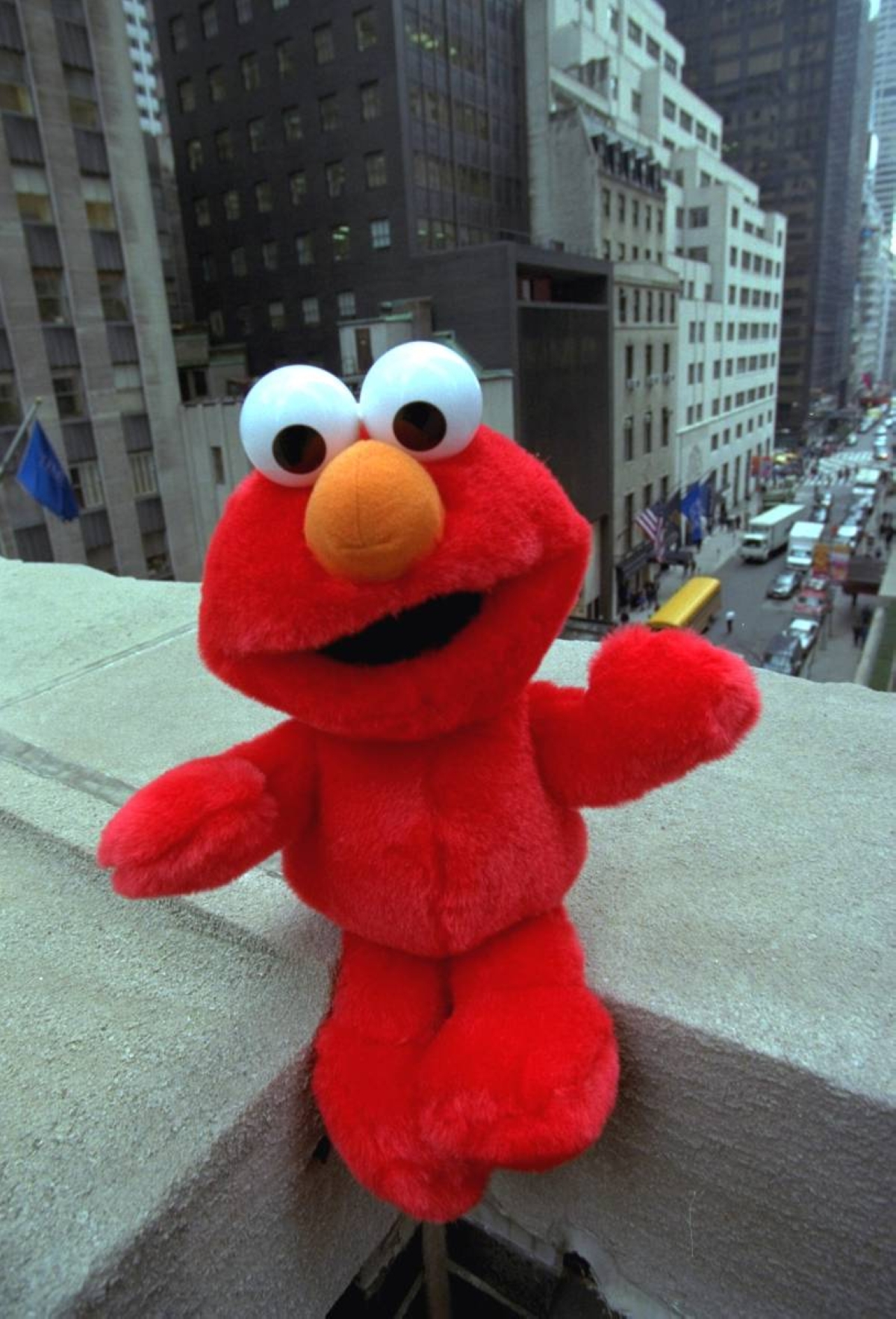
NEW YORK — Tickle Me Elmo dolls, the game of chance Bingo and the humble playground slide are among the finalists to get into the National Toy Hall of Fame this year, a lineup that also includes cuddly Care Bears, the dice game Yahtzee, the ancient game Mahjong and the Pokémon Trading Card Game. The Hall announced its 12 finalists for the Class of 2026 on Wednesday and opened voting to the public and a panel of judges who will choose which will be honored in November. The public can weigh in between Sept. 16-23. Joining the nominees are the handheld electronic game Bop It!, Monster High dolls, the portable, miniature worlds of Polly Pocket, and the board games Mouse Trap and Sorry! "It's debating season, and this year's finalists give everyone plenty to talk about — from classic games to plush icons and other toys that have shaped generations of play. The debate is part of the fun because every toy sparks different memories and makes its own case for why it matters," Michelle Parnett-Dwyer, senior curator at the museum, said in a statement. While anyone can nominate a toy, the ones that make it into the Hall must be considered icons, have engaged multiple generations, fostered creativity, or profoundly changed play or toy design. The three winners will join the 90 toys enshrined in the National Toy Hall of Fame, a list that includes Cabbage Patch Kids, Dungeons & Dragons, Hot Wheels, Frisbee, G.I. Joe and Mr. Potato Head. Some of the entries this year have been knocking on the Hall door for years, including Tickle Me Elmo, the Pokémon Trading Card Game and Mahjong.

Joyful dressing and the trends that took over New York Fashion Week

Joyful dressing and the trends that took over New York Fashion Week

Sep 17, 2026

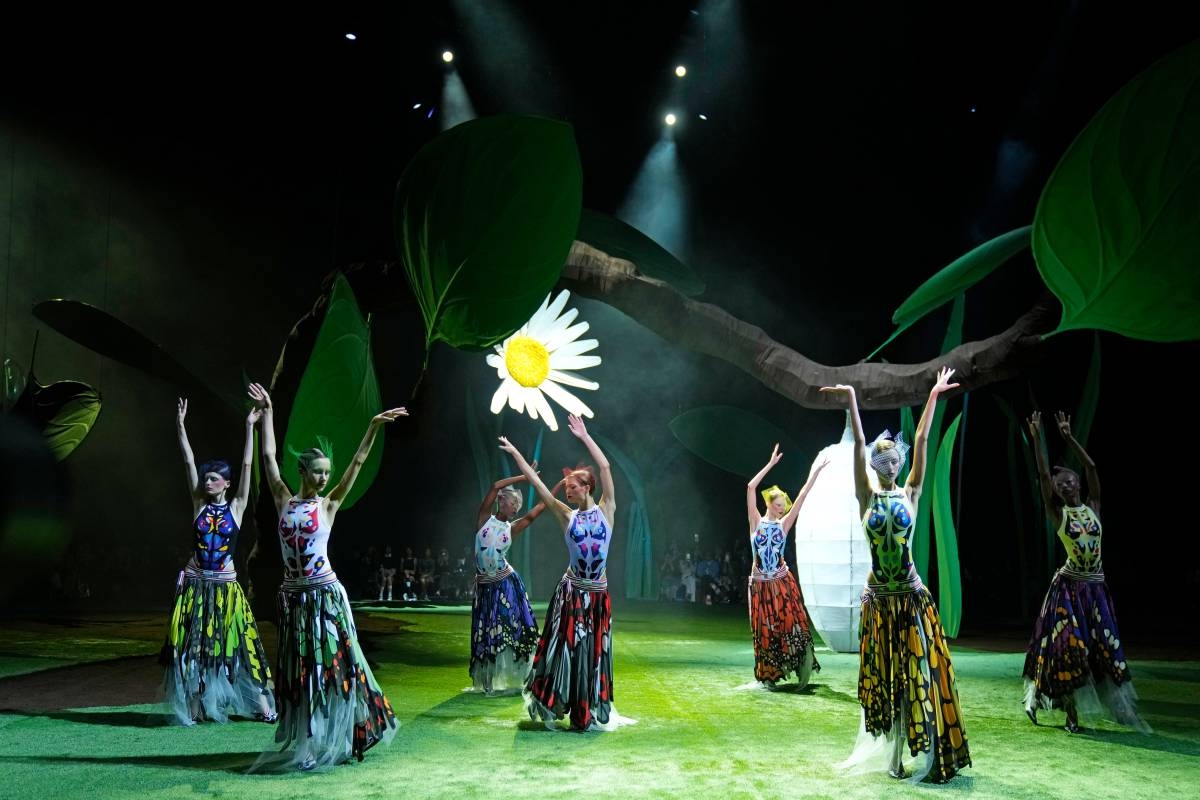
NEW YORK — Across the runways this New York Fashion Week, designers reimagined spring dressing by shaking up the season's staples of florals and pastels, opting instead for more modern and irreverent trends. From legacy brands to emerging talents, designers including Tory Burch, Ralph Lauren and Eckhaus Latta brought joy back to dressing with sartorial twists on color, movement and contrasts that could easily transition off the Spring/Summer 2027 catwalks and into New York's busy streets. While New York Fashion Week is only the first stop for celebrities and fashion editors before seeing what London, Milan and Paris have in store, the celebratory tone is bound to be contagious. The joy of dressing Designers had a lot to celebrate, with many marking career milestones: Rachel Comey notched 25 years, Michael Kors and Carolina Herrera reveled in 45-year anniversaries for their brands, and Coach hit a storied 85 years. Coach sent models down the runway in party hats, glittering gowns with colorful large bow trains, and gift-wrapped present accessories for its anniversary. InStyle Fashion director Kevin Huynh said designers are waving goodbye to the quiet luxury era and leaning into vibrancy. "We're really stepping into like, more is more," he told The Associated Press, "but not in that dopamine dressing where everything feels haphazardly put on, but like a real sense of vibrancy and excitement." At Eckhaus Latta, designers Mike Eckhaus and Zoe Latta feted their J.Crew collaboration with confetti. Guests were told to open envelopes on their seats at the sound of laughter during the second half of their show and toss rainbow confetti onto the runway. "Designers are really trying to kind of have fun and show the power that fashion can have in uplifting and inspiring people," Matthew Velasco, ELLE's fashion news editor, said. Tory Burch embraced joyful dressing as a sense of escape, with models in color-blocked embellished looks strutting around a circular indoor catwalk that surrounded an outdoor garden with fountains. Burch said she wanted to contrast opulent femininity with utilitarian sportswear. Her collection featured embroidered cardigans with brightly colored skirts, boa-like thin scarves and a turquoise coat with a matching bag. "I think when things are a bit more rough in the world you need to dream," Burch said. Ralph Lauren opened New York Fashion Week by bringing romance and a celebration of style to the runway. "It's about ways of dressing that celebrate ingenuity, originality, and character — the freedom and fun of creating a style that is truly personal," he said in his show notes. Michael Kors had the optimism to stage his show outside in the garden at the Museum of Modern Art, where a bright orange trench coat and sunny yellow shoes popped against his black and white looks. Thom Browne, who often leans into whimsy, created a show inspired by "A Bug's Life," with a giant indoor garden and models dripping in green crystals that hung from layered suiting. Some channeled actual ladybugs and butterflies with giant colorful hoop skirts, and jackets that looked like cocoons, eliciting smiles from the crowd. Collections filled with shades of blue Designers may not be feeling blue this season, but the color was certainly interwoven throughout their collections. Ralph Lauren played with a palette of blues — from his classic denim to satin and lace gowns, to suiting and blue fur and feather collars. Tommy Hilfiger said he often takes his inspiration from nautical flags, so primary colors — including navy — were prevalent on classic and oversized blazers and rugby shirt stripes on his runway at The Plaza Hotel. Tory Burch styled turquoise and navy, and Henry Zankov delivered teal on the runway this season for Diane von Furstenberg. After a decade-long gap, the Diane von Furstenberg line returned to New York Fashion Week with Zankov unveiling his first collection as artistic director for the brand. Known for his namesake knitwear brand, Zankov highlighted animal prints on von Furstenberg's signature wrap designs, while incorporating sheer blouses and dresses along with fluid suiting. "You want to feel alive," Huynh said, "like we're coming out of the cold of winter, and color is such an easy way to accomplish that." "Chartreuse had its moment, but teal is something that feels really refined," he added. Cobalt blue or Klein Blue — made famous by artist Yves Klein — also took over the runways with Proenza Schouler and Sergio Hudson including the color in their collections. Accentuating the waist All eyes were on waistlines this season as designers sent models down runways in cummerbunds, scarves and chunky belts. For Daniella Kallmeyer of Kallmeyer, the designer added a cummerbund to a buttoned-down blue top over trousers, as well as a white cummerbund embellished with white beading over an all-black suited look. "It's that injection of androgyny with a cummerbund in womenswear that feels exciting and edgy," Huynh said. At Ralph Lauren, the designer wrapped fringed scarves around the models to break up an all-white look or add a pop of color to the waistline. Fringing out After shedding the constraints of winter coats and layers, designers introduced a freedom of movement and fluidity to their collections with fringe. Asymmetrical dresses swayed with fringe at Jonathan Simkhai while shimmering fringe peeked out from an all-black look at Rachel Comey. In a twist on tailoring, jackets dripping with fringe made their way down the runway at Monse. "I always am a firm believer that with the Spring/Summer shows, designers really flex their prowess a little bit more than fall," Huynh said. "You're really getting the full spectrum of a woman and a man's wardrobe."

YOUR NEWS, OUR NETWORK.

Do you have Great News you want to tell the world?

Be it updates about your business or your community, you can make sure that it’s heard by submitting your story to our network reaching hundreds of news sites across 6 verticals.

Utara Selatan

Bringing you from Utara to Selatan, we publish travel guides to make sure you will discover new places to visit in Malaysia and try all the local delicacies.

Newsletter